Melasma
-
6M+
Americans affected
-
90%
Cases occur in women
-
3 Types
By depth of pigmentation
-
Hormonal
Leading trigger in women
UNDERSTANDING Melasma
Understanding the “Mask of Pregnancy” and Hormonal Pigmentation
Melasma appears as stubborn, muddy-brown or grayish patches that seem to surface overnight. Whether it appeared during pregnancy, after a change in medication, or following a sunny vacation, melasma is notoriously resistant to traditional “brightening” creams. At Inverness Dermatology, we understand that melasma isn’t just a surface stain—it is a deeply rooted pigmentary challenge that requires a patient, medical-grade strategy.
The Hyper-Active Melanocyte
Unlike a standard sunspot, melasma is a complex disorder of melanogenesis. It occurs when your melanocytes (pigment-producing cells) become hypersensitized to both ultraviolet (UV) light and internal hormonal fluctuations. This creates a “confluent” pattern of pigment that sits at varying depths within the skin layers, making it vital to distinguish between epidermal and dermal involvement before beginning treatment.
Advanced Pigment Management at Inverness Dermatology
We manage Melasma (ICD-10: L81.1) by focusing on long-term stabilization rather than aggressive “quick fixes” that can cause rebound darkening.
CLINICAL DETAILS
A Breakdown of Melasma
-
Epidermal Melasma
Pigment in the upper skin layers — most responsive to topical treatment. Brown color, well-defined borders.
-
Dermal Melasma
Pigment deposited deeper in the dermis. Blue-gray tone, more resistant to topical lighteners. Deeper Layer.
-
Mixed Melasma
Both epidermal and dermal pigment present. Most common type — responds to combination therapy.
-
Centrofacial
Affects forehead, cheeks, upper lip, nose, and chin. Most prevalent distribution pattern.
-
Malar
Predominantly affects the cheeks and nose — often called "the mask of pregnancy."
-
Mandibular
Along the jaw and chin. More common in women using oral contraceptives.
EVIDENCE-BASED CARE
Our Treatment Approach
Board-certified dermatologists are specially trained to diagnose and provide customized treatments.
When to see a dermatologist
Consult a dermatologist for melasma immediately if the spots are new, changing, or causing significant distress, as they can mimic other skin conditions, such as cancer or lichen planus pigmentosus. Professional help is also necessary if your melasma is widespread, persistent, or does not respond to over the counter treatments.
Melasma FAQ
Clinical answers from our board-certified dermatologists.
It depends. If triggered by pregnancy or birth control, it may fade once the hormones level out. However, for many, it is a chronic condition. While you can’t “cure” it permanently, you can manage it into remission with consistent treatment and protection.
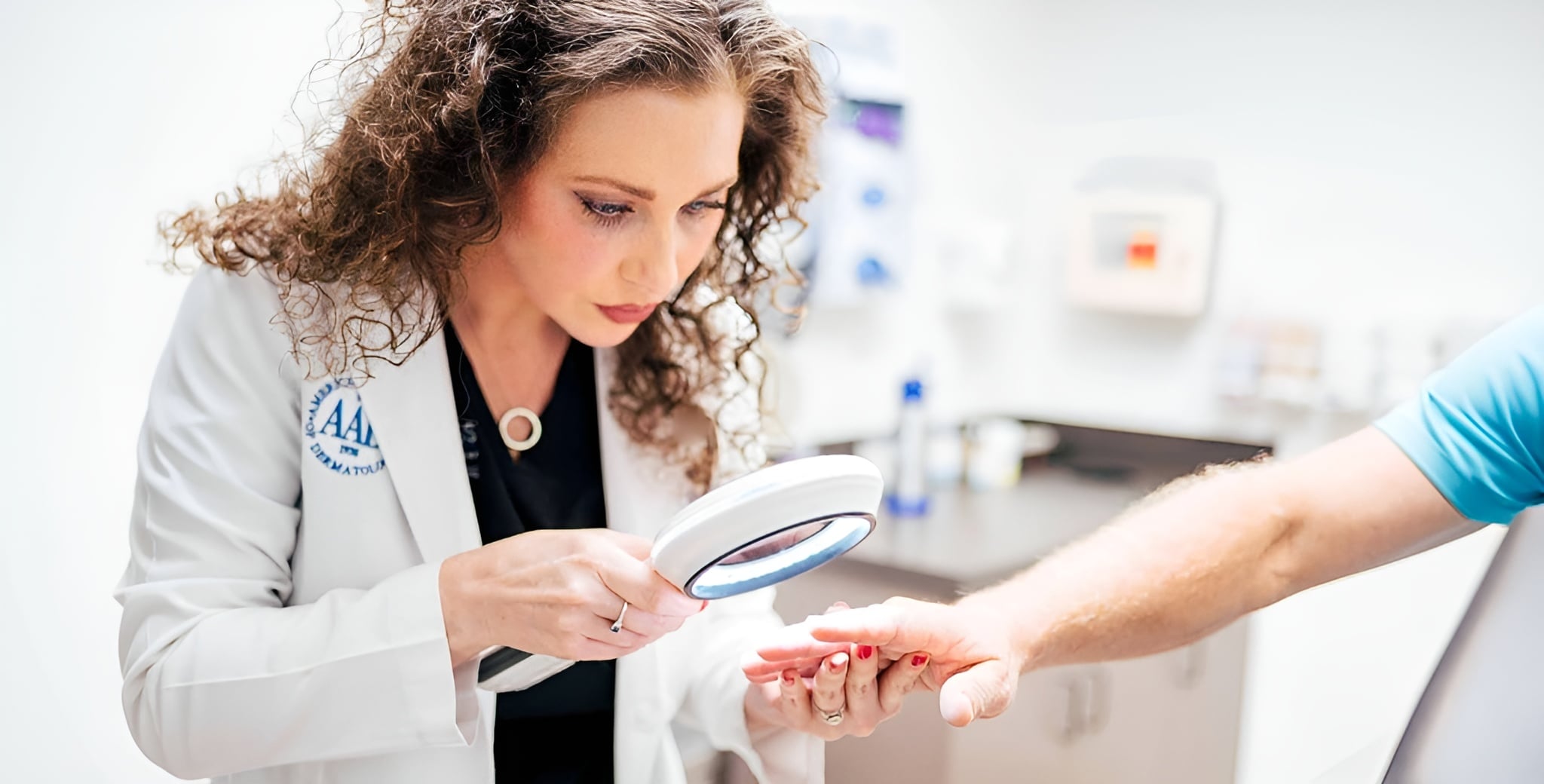
Melasma is large, blotchy, symmetrical patches affecting forehead, cheeks, upper lip, chin.
Yes, though it is much less common (about 10% of cases). In men, it is almost exclusively caused by sun exposure and genetic predisposition rather than hormonal fluctuations.
Most aggressive treatments (like Hydroquinone and Retinoids) are not recommended during pregnancy. It is usually best to stick to mineral sunscreens and gentle brighteners like Azelaic acid until after delivery.