205-995-5575 250 Inverness Center Dr, Birmingham, AL 35242
Hyperhidrosis
It is estimated that roughly 3% to 5% of the population lives with hyperhidrosis. You are definitely not alone, even if people don’t talk about it openly.
Reclaiming Confidence: Clinical Solutions for Excessive Sweating
Do you find yourself avoiding certain fabrics, carrying a change of clothes, or feeling self-conscious in social situations because of excessive sweating? Sweating isn’t just a response to heat or exercise—it’s an “always-on” switch that interferes with daily life. This is more than a hygiene issue; it is a medical condition known as Hyperhidrosis.
At Inverness Dermatology we offer advanced clinical treatments that can turn that switch off for months at a time.
Overactive Eccrine Glands
Sweating is a vital function for thermoregulation, but in patients with Primary Focal Hyperhidrosis, the sweat glands are overstimulated by the nervous system even when the body doesn’t need to cool down. This is most common in the axillae (underarms), palms, and soles of the feet. It occurs because the neurotransmitter acetylcholine is constantly signaling the eccrine glands to produce fluid, leading to the physical and emotional discomfort associated with “heavy sweating.”
Neuromodulation for Sweat Control
At Inverness Dermatology, we treat Primary Focal Hyperhidrosis using non-surgical, medical interventions.
The most common type. It is localized to specific areas like the palms, soles, underarms, or face. It is usually hereditary and not caused by another disease.
Generalized Hyperhidrosis
Excessive sweating all over the body. This is usually a side effect of a medical condition (like thyroid issues or diabetes) or a medication.
Sleep Hyperhidrosis
Excessive sweating that occurs only during sleep; this is almost always a "secondary" type requiring a doctor's visit to determine the underlying cause.
EVIDENCE-BASED CARE
Our Treatment Approach
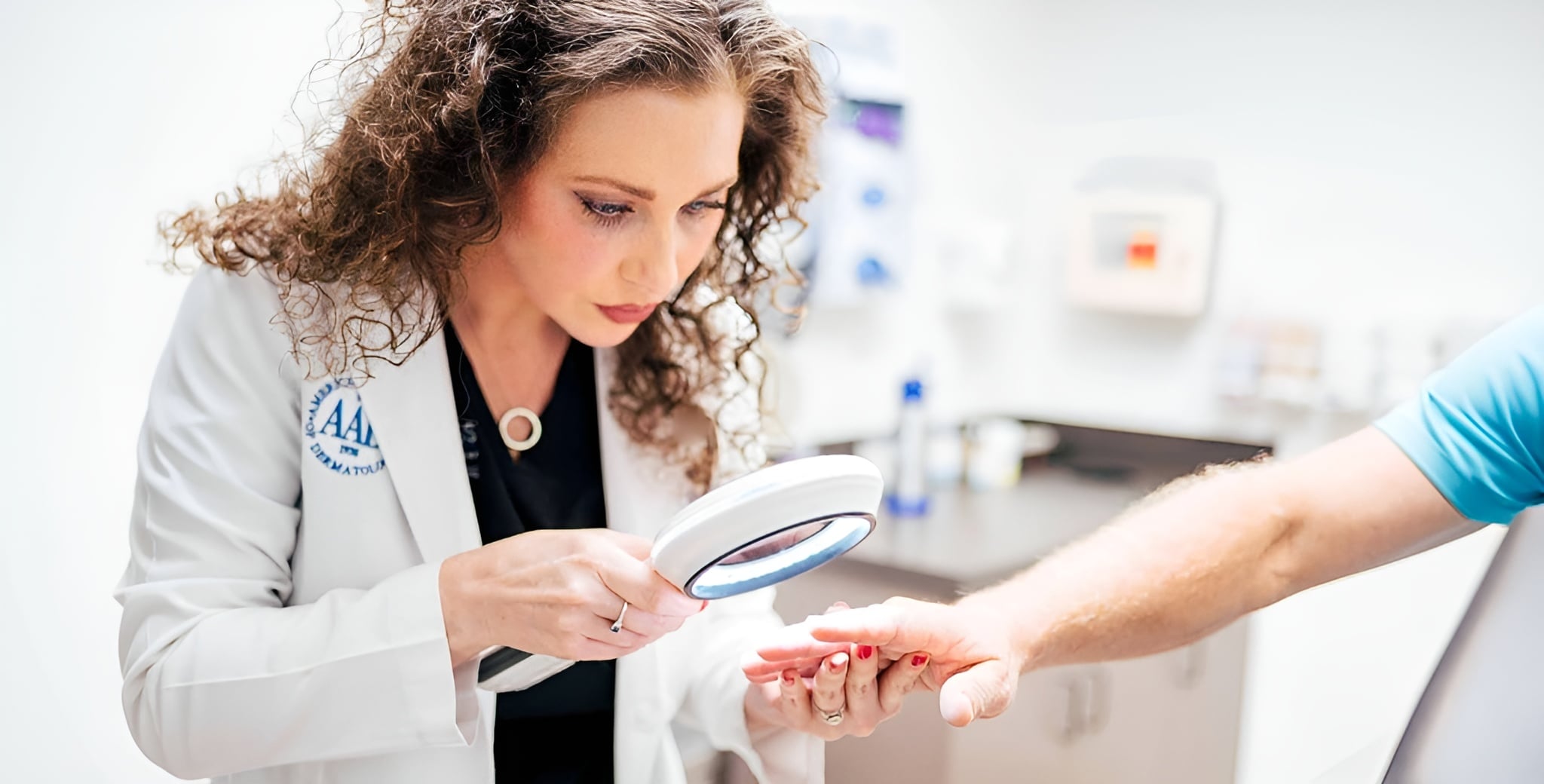
Board-certified dermatologists are specially trained to diagnose and provide customized treatments.
When to see a dermatologist
See a dermatologist for hyperhidrosis if excessive sweating disrupts your daily life, causes emotional distress, or causes skin issues like rashes. Consult a specialist if you experience night sweats, sudden increases in sweating, or if over-the-counter antiperspirants fail.
Key Indicators It’s Time to See a Dermatologist
Daily Disruption: Sweating interferes with daily routines, work, or social life.
Failed Self-Care: OTC antiperspirants are ineffective, causing skin irritation, or leaving heavy stains.
Emotional/Social Distress: Sweating causes anxiety, embarrassment, or social withdrawal.
New or Sudden Sweating: A sudden increase in sweating or new, unexplained, heavy sweating.
Night Sweats: Sweating occurs during sleep.
Targeted Areas: Persistent, heavy sweating of the underarms, hands, feet, or face
Hyperhidrosis FAQ
Clinical answers from our board-certified dermatologists.
What exactly is hyperhidrosis?
It is a condition characterized by sweating that far exceeds what is necessary for body temperature regulation. There are two main types:
Primary Focal Hyperhidrosis:
Excessive sweating in specific areas (hands, feet, underarms, face).
Secondary Generalized Hyperhidrosis:
Sweating caused by an underlying condition (like thyroid issues or menopause) or as a side effect of medication. This often affects the whole body.
Is it safe to stop sweating in one area?
Yes. Your body has millions of sweat glands. If you stop sweating in your underarms or hands, your body is perfectly capable of cooling itself through other areas.
Will I get "compensatory sweating"?
This is most common after ETS surgery (Endoscopic Thoracic Sympathectomy), where the body starts sweating excessively in new areas like the chest or back. Because of this risk, surgery is usually considered a last resort.
How do I talk to a doctor about it?
Be specific. Instead of saying “I sweat a lot,” say “I have to change my shirt three times a day” or “I avoid shaking hands because of moisture.” This helps them understand the clinical severity.
Why do my hands sweat more when I'm nervous?
In primary focal hyperhidrosis, the sweat glands are over-responsive to emotional triggers. While stress doesn’t cause the condition, it acts like a “volume knob,” turning the sweating from moderate to severe instantly.